
[#3] Rocket Science: Propulsion

It’s been a while since I focused on this course, but now I’m back at it!
Rocket Science is a term used for incredibly difficult things. But what exactly is it?
Rocket science deals with the design, development, testing, and operation of rockets that launch humans and spacecraft into orbits around the Earth and beyond. In the next few posts, we’ll cover rocket science basics.
Luckily, the concepts behind rocket science don’t seem that difficult!
How do rockets work?
To understand rockets, we’ll first understand how they work by understanding the underlying propulsion.
Basics of Rocket Propulsion
Propulsion means to push forward or drive an object forward.
A propulsion system is a machine that produces thrust to push an object forward. If you have a skateboard, you can be your own propulsion machine!

You move forward by exerting a force and pushing on it (Newton’s 2nd law) and by doing so there is an equal and opposite force back on you (Newton’s 3rd law). This is how rockets work.
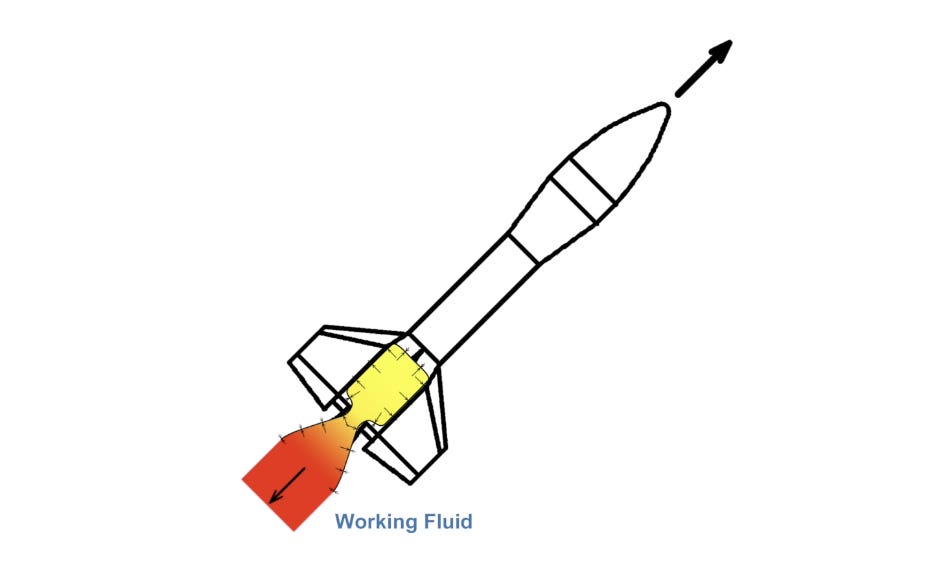
In the case of a rocket, the fluid that is pushed is the ‘working fluid’ that gets pushed out at a certain speed to propel the rocket forward.
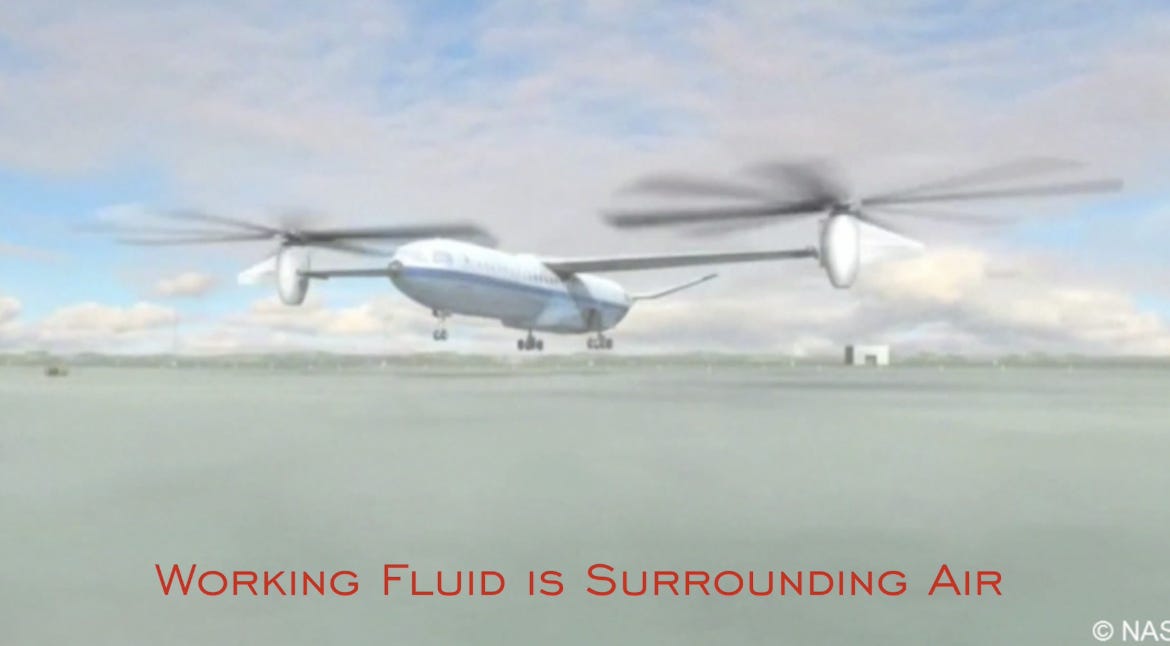
In the case of a propeller, the air if the ‘working fluid’ and creates a thrust that propels it to move.
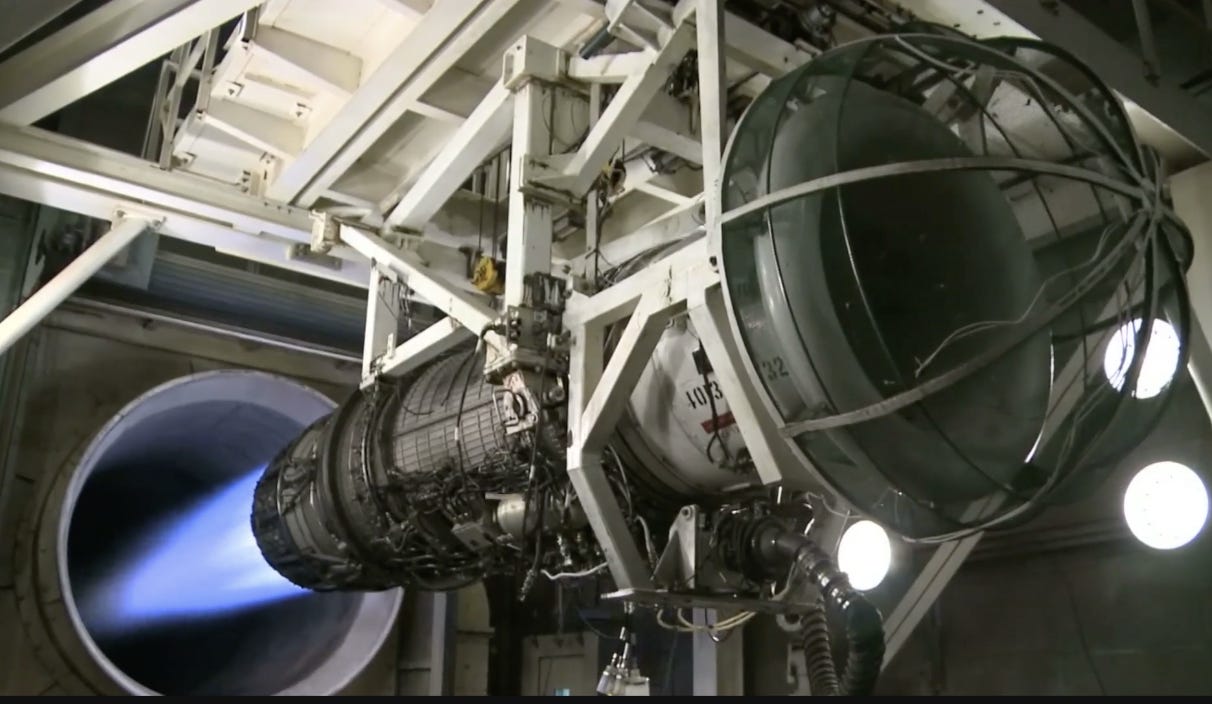
In jet engines (or gas turbine engines), they carry their fuel-- which is burned together with oxygen, which is brought in and then it takes the hot combustion gases and pushes them out the end of the jet engine and that gives it thrust to go forward.
Jet Engine vs. Rocket Engine
A jet engine, as seen above, it only needs to carry its own fuel. A rocket engine, however, has to carry its fuel AND also an oxidizer (most of the times oxygen)— essentially you need something to burn the fuel with.
So instead of just putting ‘fuel’ in a rocket, we actually call it loading it up with “propellants.”
Propellants
There are 2 types of propellants:
Fuel - this can be kerosene, liquid hydrogen, alcohol or methane
Oxidizer - to help ignite the fuel
When these two come together, then you’re ready to go into space 🚀
Coming up next: Types of rocket engines